
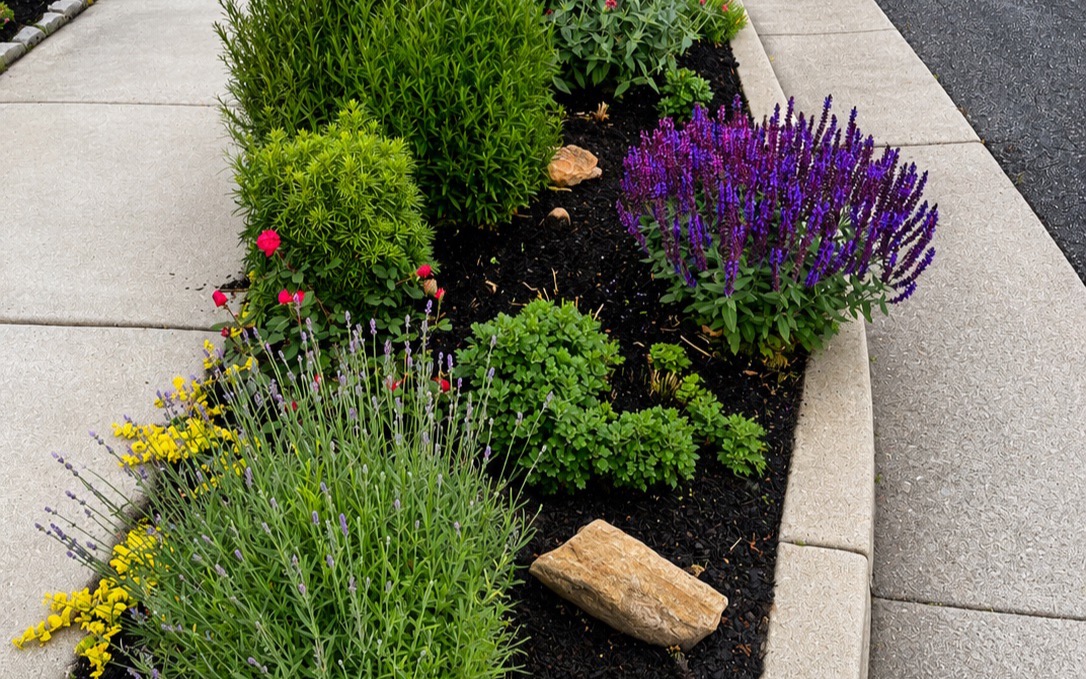
Take a look at the strip of grass between your sidewalk and the street. It’s narrow, it’s surrounded by hot concrete on both sides, and half the water you spray at it ends up running down the gutter. Along the Wasatch Front, that little ribbon of lawn — the park strip — is usually the thirstiest, worst-performing square footage in the whole yard. That’s exactly why "flipping your strip" has become one of the most popular projects in Utah landscaping.
Flipping your strip means removing the grass and replacing it with a low-water planting: a layer of rich compost, water-wise perennials and ornamental grasses on drip irrigation, and rock accents that look good in every season. Done right, it uses a fraction of the water, needs no mowing, and honestly looks better than the strip of struggling turf it replaced. Here’s how the project goes together — and the materials and plants we recommend from our yard in Draper.
Why the park strip is the smartest place to start
If you’ve been curious about water-wise landscaping but aren’t ready to redo the whole yard, the park strip is the perfect first project. It’s a small, contained space with clear edges, so it’s a weekend-scale job. And because it’s the hardest spot in the yard to water efficiently, it’s where a conversion saves the most.
Get paid to flip it
Many Utah water districts offer per-square-foot rebates for converting park strips to low-water landscaping through the Flip Your Strip program. Check utahwatersavers.com to see if your address qualifies and what the current requirements are before you start — most programs require pre-approval.
The basic recipe
Every flipped strip follows roughly the same playbook:
- Remove the grass — sod cutter, sheet mulching, or spray-and-strip
- Convert the sprinklers to drip irrigation
- Plant low-water perennials and grasses — aim for at least half the strip covered at maturity
- Top-dress with a 3–4 inch layer of compost mulch
- Add crushed rock for pathways, borders, and step-out zones — with weed barrier underneath
The materials that make it work
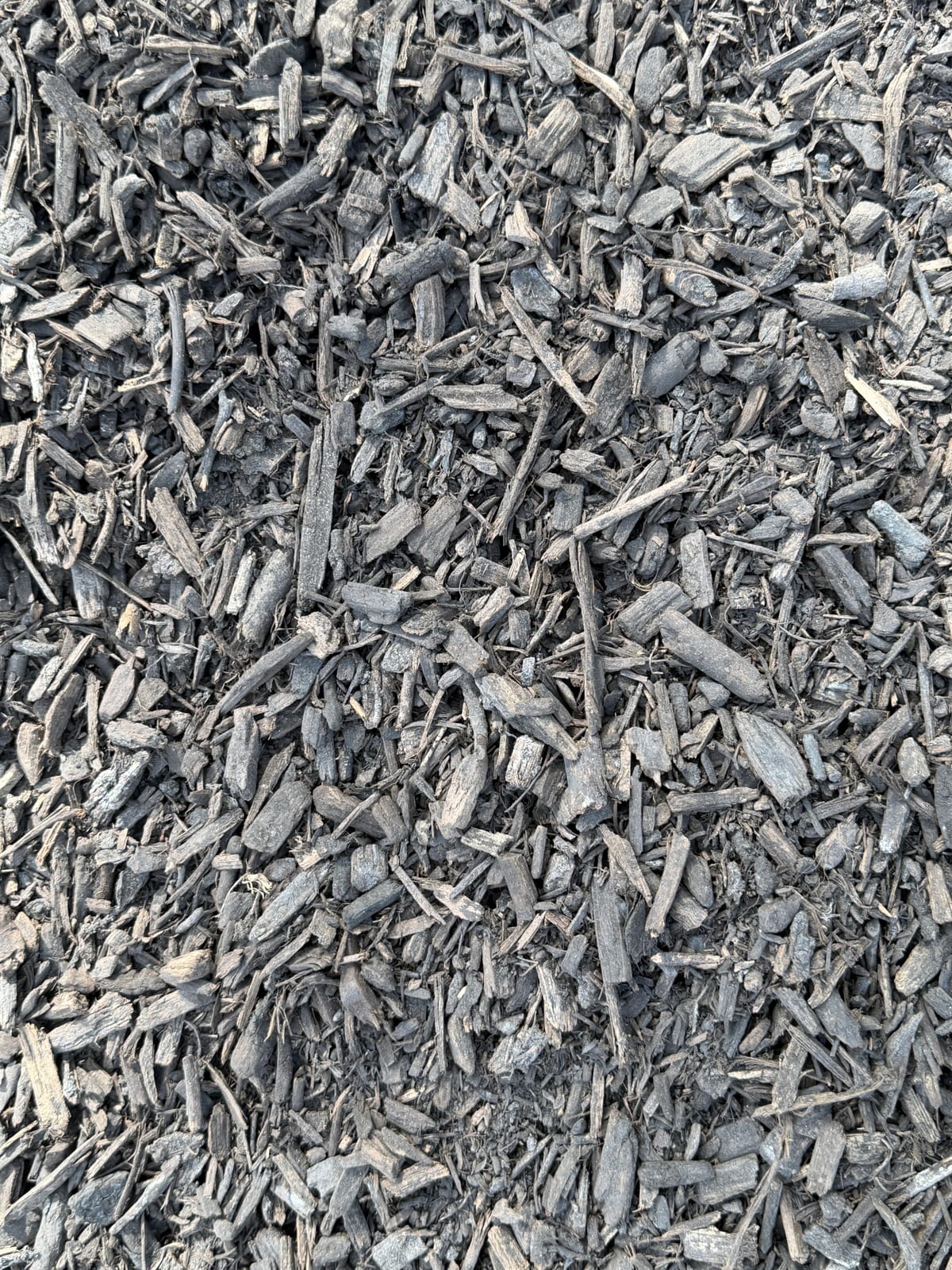
Organic Compost
EPA Class A “Exceptional Quality” · plant-based · aged three months
In a park strip, compost is the finished surface: spread a 3–4 inch layer over the whole bed as your mulch. And because it’s completely natural — not dyed like many other mulches — its rich dark-brown color won’t fade over time.
Why compost instead of bark
- Doesn’t blow away in wind or wash into the gutter like bark can
- Holds moisture in the soil and cools plant roots through summer
- Suppresses weeds naturally
- Natural and undyed — the dark brown color won’t fade
- Breaks down over time, continuously feeding the soil — so plants establish faster and thrive
Available in bulk by the cubic yard or delivered curbside in a one-yard super sack.
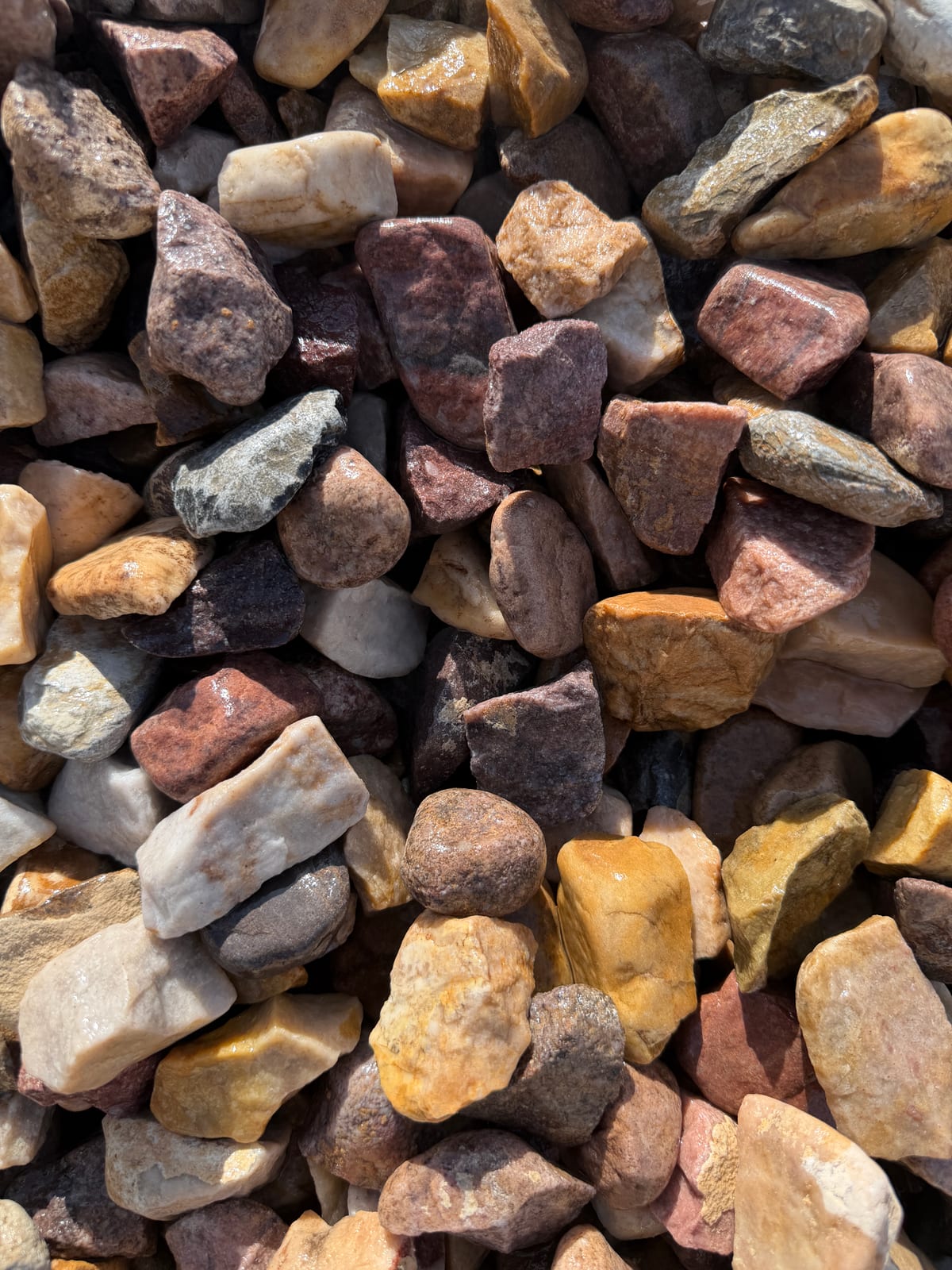
1.5" Neapolitan Crushed
Crushed decorative rock · dark gray, brown & red blend
A flipped strip still needs places to step — a path through the strip so guests parked at the curb can reach the sidewalk, and a landing where car doors open. Crushed rock is ideal here: it’s easier to walk on and stays in place better than rounded cobble. And our Neapolitan blend is one of our most popular decorative rocks for a reason — a stunning mix of warm gray, brown, and red that pairs beautifully with dark compost and silvery low-water foliage.
At a glance
- One of our most popular decorative rocks — stunning natural color mix
- Angular crushed edges lock together underfoot — easier to walk on than cobble
- Install at least 3 inches deep for full coverage
- Heavy enough to stay put — won’t drift into street drains like lightweight mulch
- Never fades, blows away, or needs replacing
Lay weed barrier underneath — we recommend it under any gravel or rock, but not under organics like compost or mulch.
Two favorites — not the only options
These are just two of the many mulch and decorative rock options we carry that work beautifully in a park strip. Come walk the yard and compare them in person — and pick up weed barrier while you’re here; we recommend it under any gravel or rock (skip it under compost and mulch, which should break down into the soil).
Four low-water plants that love park strips
The plants that succeed in a park strip are the ones that shrug off reflected heat from the sidewalk and street and get by on a deep drink now and then. These four are proven performers here, and all of them stay low enough to keep sight lines clear near driveways and corners.
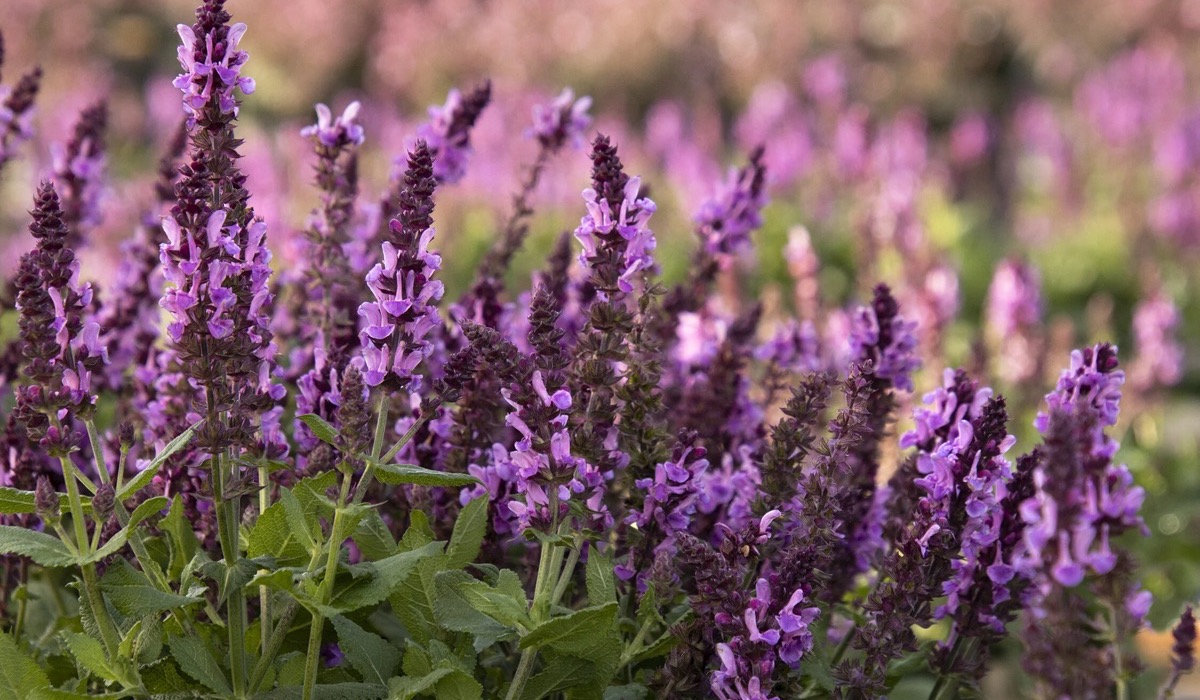
Rose Marvel Sage
Salvia nemorosa 'Rose Marvel'
A compact salvia with big summer color — and a beautiful alternative to the commonly planted May Night meadow sage. Vibrant rose-pink flower spikes rise over tidy foliage from summer into early fall.
At a glance
- Compact habit of just 10–12 inches tall and wide — perfect for tight spaces like park strips
- Vibrant rose-pink flower spikes that attract hummingbirds and other pollinators
- Long blooming season from summer into early fall
- Deer and rabbit resistant
If you’ve admired May Night meadow sage, this is its compact, park-strip-sized cousin.
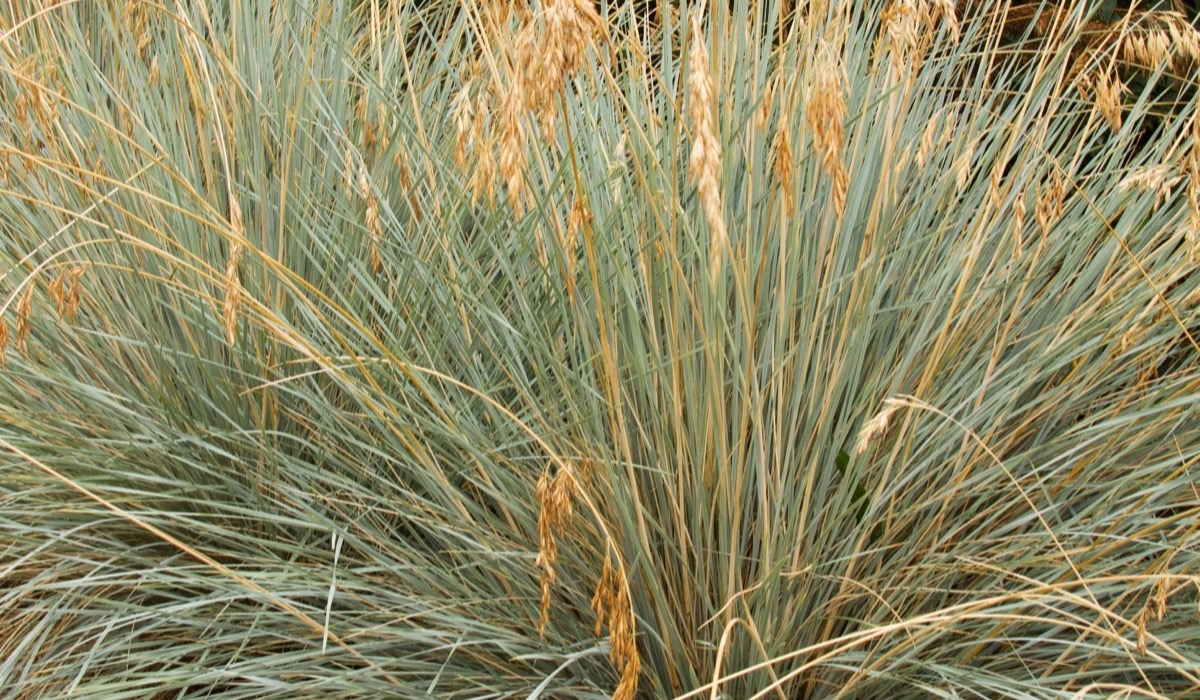
Blue Oat Grass
Helictotrichon sempervirens
Every strip needs some height and movement, and blue oat grass delivers both without getting unruly. One of the most reliable ornamental grasses for Utah landscapes — and a striking alternative to the commonly planted blue fescue — it forms a tidy clump that looks intentional twelve months a year.
At a glance
- Clump-forming habit around 2 feet tall and wide — right at the park strip height limit
- Eye-catching blue-gray foliage with year-round color and texture
- Adaptable to both sandy and clay soils, and tolerant of salt — a real plus next to the street
- Low maintenance and an excellent park strip performer
Plant it in odd-numbered groups down the strip for rhythm and repetition.
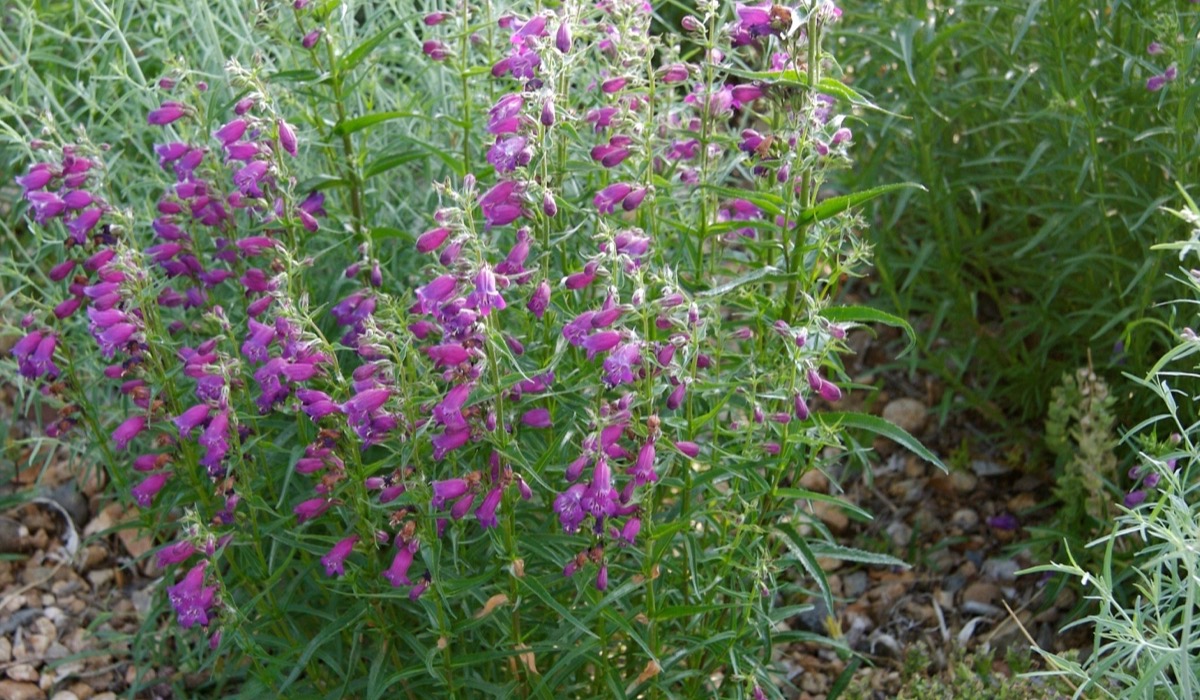
Pikes Peak Purple Penstemon (Beardtongue)
Penstemon × mexicali 'P007S'
Utah is penstemon country — with more than 100 native species, we have more penstemons than almost anywhere else on Earth. Pikes Peak Purple is built for our heat, producing beautiful magenta-purple blooms throughout the summer on plants that thrive in full sun.
At a glance
- Magenta-purple flowers throughout the summer
- Tubular blooms are a favorite nectar source for hummingbirds
- Thrives in full sun and is exceptionally heat tolerant
- An outstanding choice for park strips and other hot, sunny spots
Snip spent spikes mid-season and it will keep pushing new blooms.
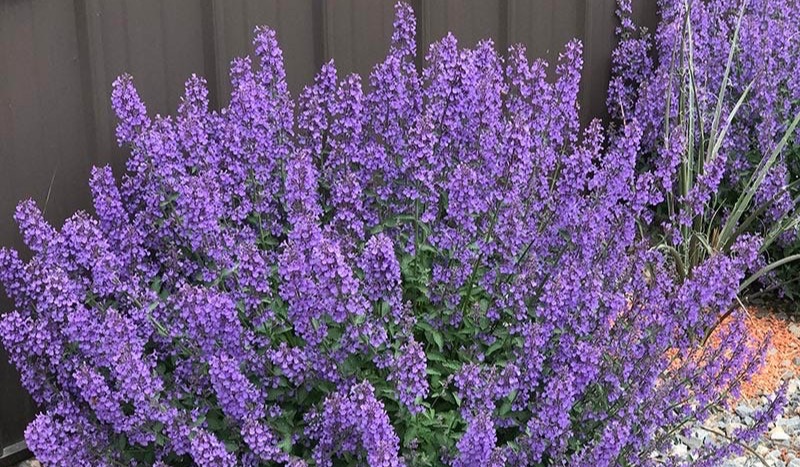
Walker’s Low Catmint
Nepeta × faassenii 'Walker's Low'
Catmint is the workhorse of low-water color, and Walker’s Low is a dependable favorite: fragrant, periwinkle-blue flowers over soft, silvery foliage throughout the summer, on a plant that loves full sun and heat.
At a glance
- Quickly grows to about 2 feet tall and 2–3 feet wide — one plant fills real space
- Fragrant periwinkle-blue flowers all summer — shear once mid-season for a fresh flush
- Loves full sun and heat; buzzing with bees and beneficial pollinators
- Low maintenance, dependable, and easy to care for
Alternate catmint with penstemon down the strip for months of overlapping color.
Tips for a strip that thrives
- Know the rules before you dig. Check with your city (and your HOA, if you have one) about park strip codes before making changes. And if you’d rather not design from scratch, Localscapes.com offers free pre-designed park strip plans built for Utah yards.
- Water deeply, not often. Run the drip long enough to soak the root zone, then let the soil dry out between waterings. After the first season, most of these plants need only an occasional deep drink.
- Keep it under two feet. Plants in a park strip should stay no more than about two feet tall — taller plants block views for drivers and pedestrians and can interfere with city maintenance.
- Leave step-out room at the curb. A strip of crushed rock along the street side gives passengers somewhere to land without trampling plants.
- Top up the compost. Because compost feeds the soil as it breaks down, plan to refresh the top layer every year or two. That’s a feature, not a flaw — it’s what keeps the bed improving.
- Plant in spring or fall. Cooler weather gives roots time to establish before the strip’s summer heat really tests them.
One stop for the whole flip
Everything a park strip flip needs is here at our yard in Draper — bulk organic compost, Neapolitan crushed rock, and a nursery stocked with low-water perennials and grasses suited to Utah. Tell us the square footage of your strip and we’ll help you figure out how many yards of compost and rock to order, with delivery available across the Wasatch Front. Happy flipping!