
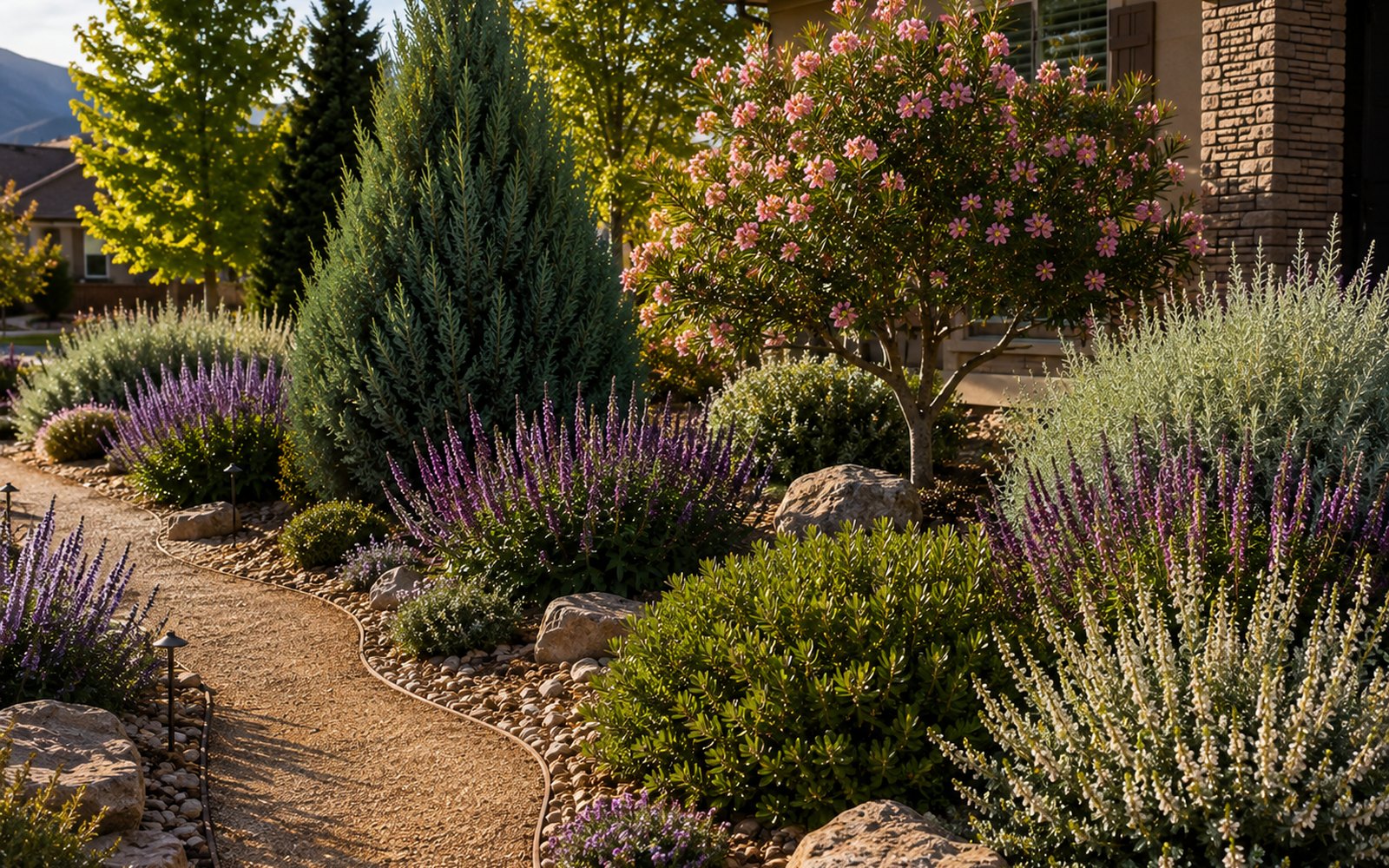
Water-wise landscaping doesn’t mean giving up beauty, color, or variety. With thoughtful design and the right plants, you can build a landscape that looks better than the lawn it replaced and asks for a fraction of the water. This guide covers what xeriscaping actually is, five practical ways to cut water use in the yard you already have, and ten water-wise trees and shrubs that perform well along the Wasatch Front.
Xeriscaping isn’t “zeroscaping”
The most common misconception about xeriscaping is that it means tearing everything out and replacing it with a wide bed of rock. Rock can certainly be part of a water-wise landscape — but a yard covered entirely in gravel isn’t a xeriscape. It’s just a hot, bare yard. Xeriscaping is about designing intentionally and removing unnecessary water use, not removing plants.
A xeriscape can include trees, shrubs, perennials, pathways, and even lawn. The difference is that every part of it is there on purpose. A central open space framed with trees, shrubs, and perennials. Paths and hardscape that create room to move and gather. Planting beds sized to what you’ll actually enjoy rather than whatever was left over.
You don’t have to eliminate turf entirely. But replacing the sod that serves no real purpose — the narrow park strip, the awkward side yard, the ribbon along the driveway — with a mix of plants, mulch, and usable outdoor space makes a measurable difference in what your yard drinks all summer.
Five ways to use less water
Small changes in how you design, mulch, and water add up quickly. None of these require starting over.
- Mulch to hold moisture in the soil. Mulch does more than tidy up a bed. A good layer slows evaporation, so plants stay hydrated longer between waterings, and it shades out the weeds that would otherwise compete for that same water. Different beds suit different materials — Organic Compost, Chocolate Mulch, and Supreme Shredded Bark all work well and look quite different from one another.
- Rethink where you use lawn. Not every square foot needs grass. Narrow park strips and hard-to-water corners are the first places to reconsider. Trees, shrubs, perennials, mulched beds, decorative rock, and pathways all hold those spaces better than turf does — and in a high-traffic area, a patio or path is both more useful and less thirsty. Red or blonde patio flagstone makes a natural-looking patio; Gray Chat works well as a simple pathway.
- Water deeply, and less often. Short daily cycles train shallow roots. Water thoroughly instead, then let the soil dry appropriately before the next cycle. Deep roots reach moisture farther down in the soil and hold up far better through a hot, dry stretch.
- Water early or late. Run water in the early morning or later in the evening, when temperatures are cooler and far less is lost to evaporation before it ever reaches the roots.
- Use drip irrigation where you can. Drip delivers water directly to the soil at the root zone instead of spraying it across a whole area. For trees, shrubs, perennials, and planting beds, it puts the water where the plant can actually use it.
What to put in place of sod
Hardscape
- Red patio flagstone
- Blonde patio flagstone
- Gray Chat pathway material
Planting
- Water-wise trees and shrubs
- Perennials and ornamental grasses
- Decorative rock accents
Weed barrier is worth adding under gravel or decorative rock — but skip it under compost and mulch, which are meant to break down into the soil.
Ten water-wise trees and shrubs
A water-wise landscape doesn’t have to give up shade, color, or seasonal interest. These are plants well adapted to our climate and our alkaline soil, and once established they ask for very little. All ten have been in the nursery this month — stock moves, so call ahead if you’re making the trip for something specific.
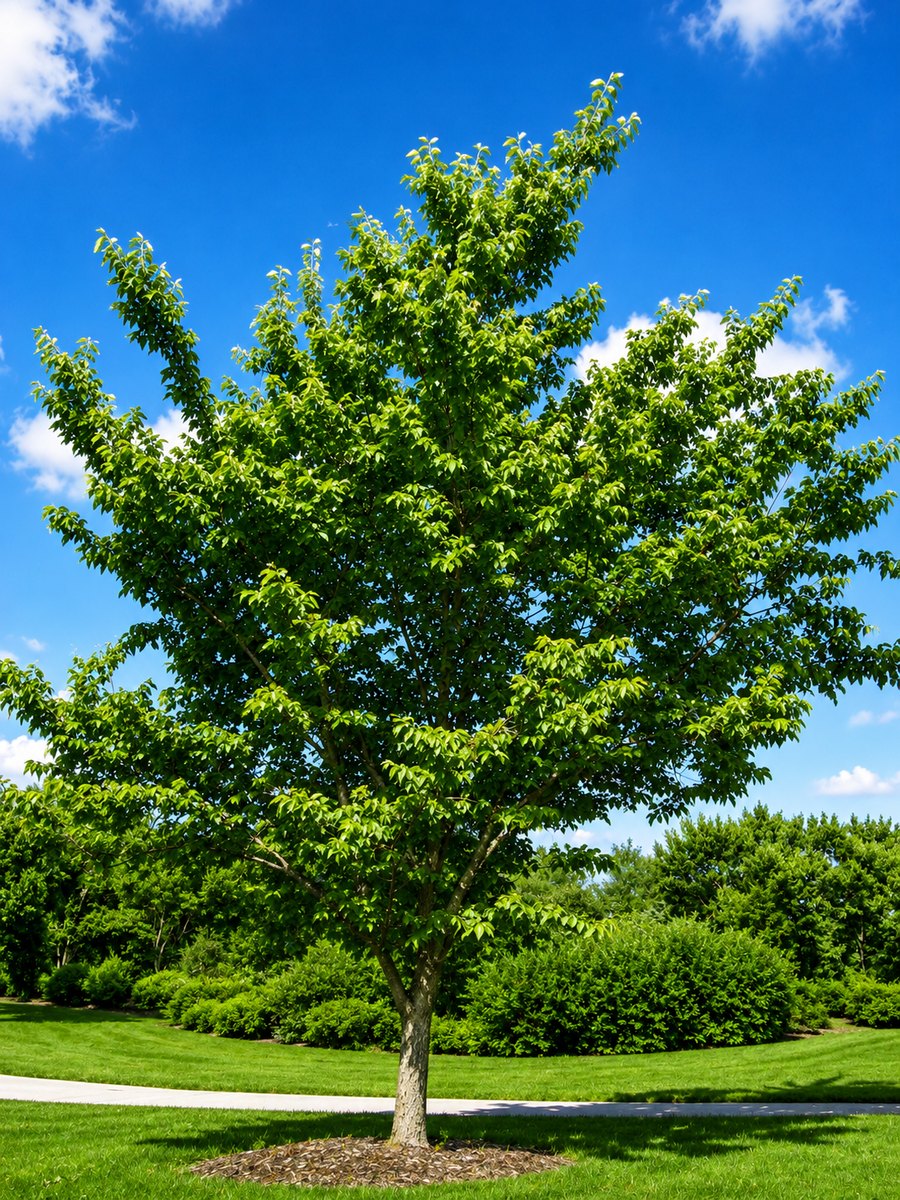
Western Hackberry
Celtis occidentalis
A tough, adaptable shade tree for the spots where nothing else wants to grow. Green leaves turn yellow in fall, and the small fruit it produces is popular with birds without being the kind of mess you’ll resent raking.
At a glance
- Tolerates drought, heat, wind, and high-pH alkaline soil
- Green summer foliage turning yellow in fall
- Small fruit that birds favor, and not especially messy
- Best for shade, larger yards, and difficult sites
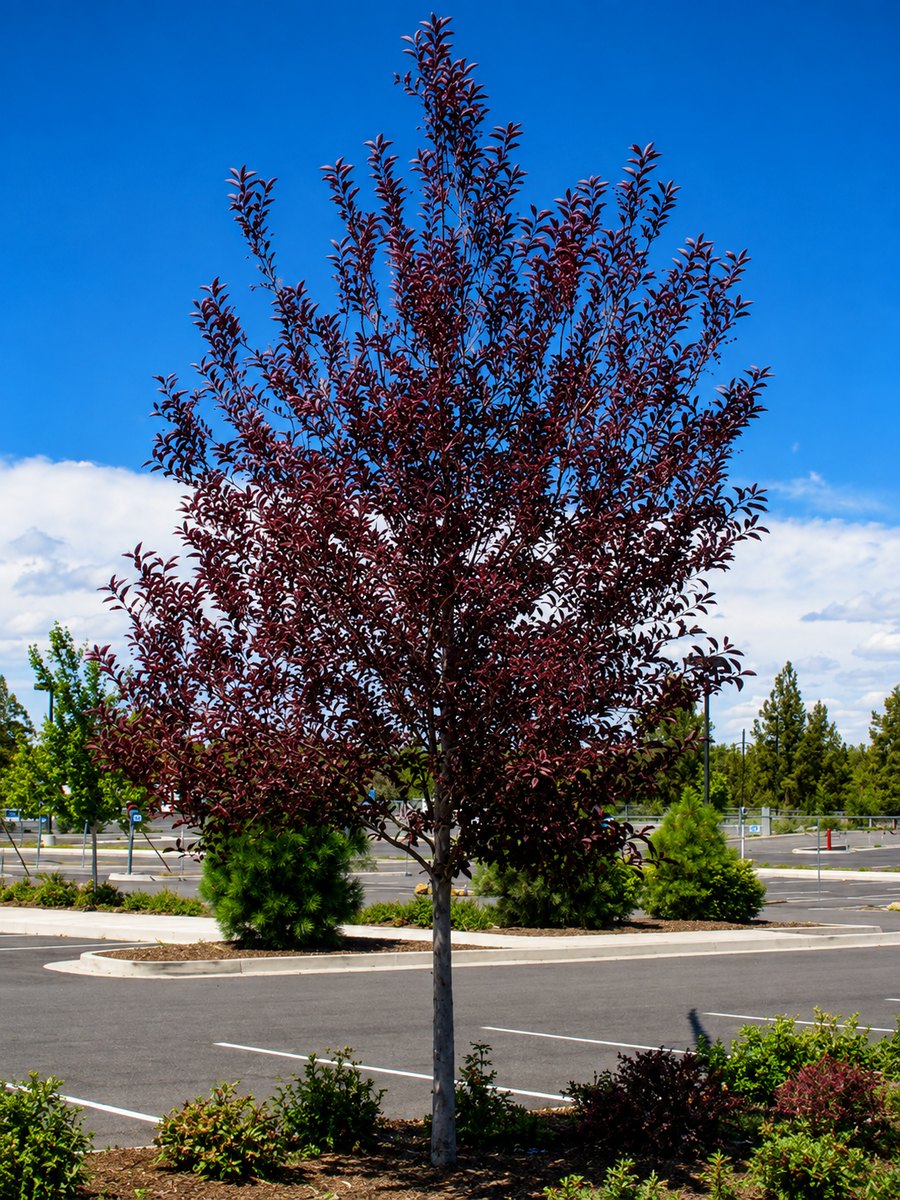
Canada Red Improved Chokecherry
Prunus virginiana ‘Canada Red’
One of the most recognizable ornamental trees in Utah, and deservedly so. New leaves emerge green and deepen to a rich purple-red as the weather warms, then intensify again in autumn. Fragrant white flowers arrive in long clusters in spring.
At a glance
- Roughly 25 feet tall and 20 feet wide
- Upright, spreading, rounded habit
- Green spring foliage maturing to deep purple; red to reddish purple in fall
- Small white flowers in long clusters
- Very cold hardy — rated to Zone 2
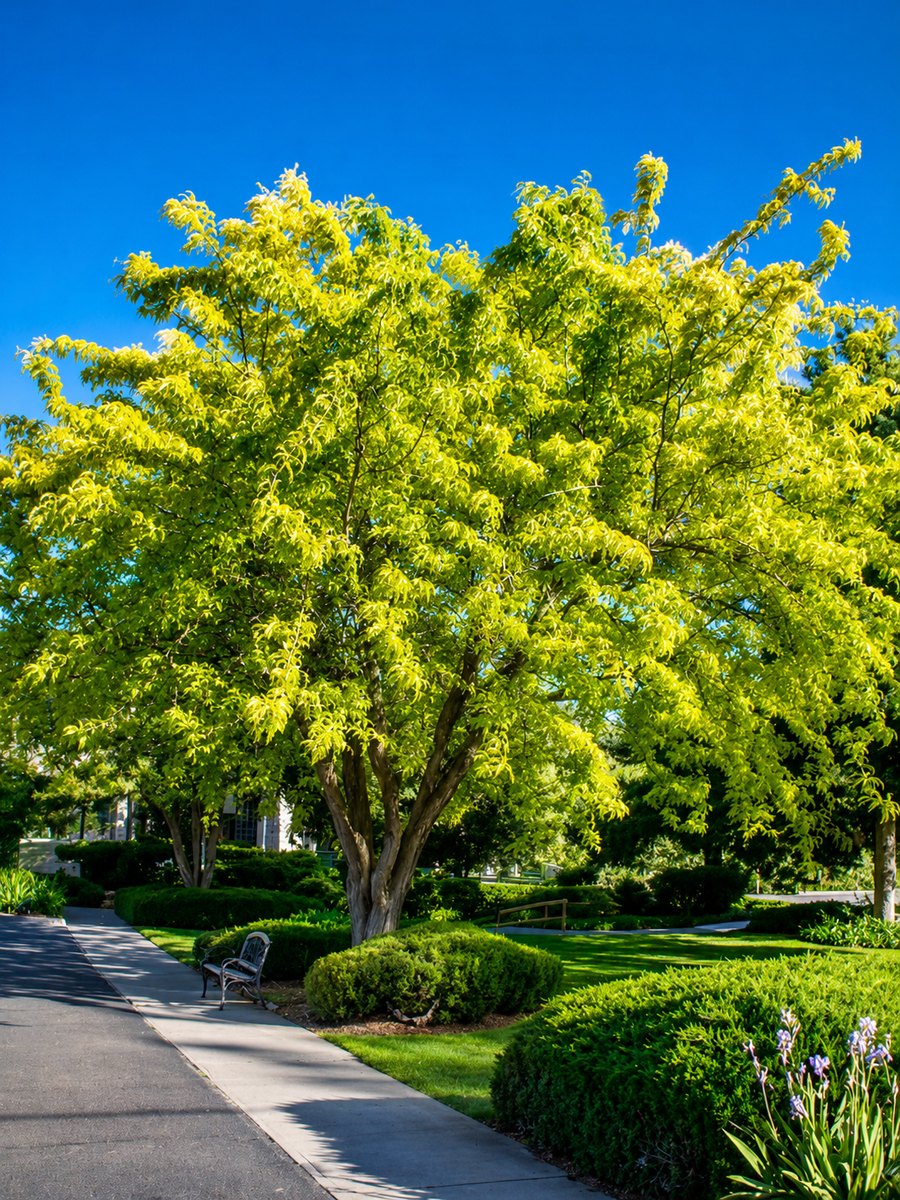
Sunburst Honeylocust
Gleditsia triacanthos ‘Suncole’
Honeylocusts cast a light, filtered shade that grass and perennials can still grow beneath — a rarity among shade trees. Sunburst adds a second act: new foliage emerges bright golden-bronze, greens up through summer, then returns to golden yellow in fall.
At a glance
- About 40 feet tall and 35 feet wide
- Golden-bronze new growth, green in summer, golden yellow in fall
- Fine-textured leaves that cast filtered shade
- Full sun, and only occasional water once established
- Hardy to Zone 4
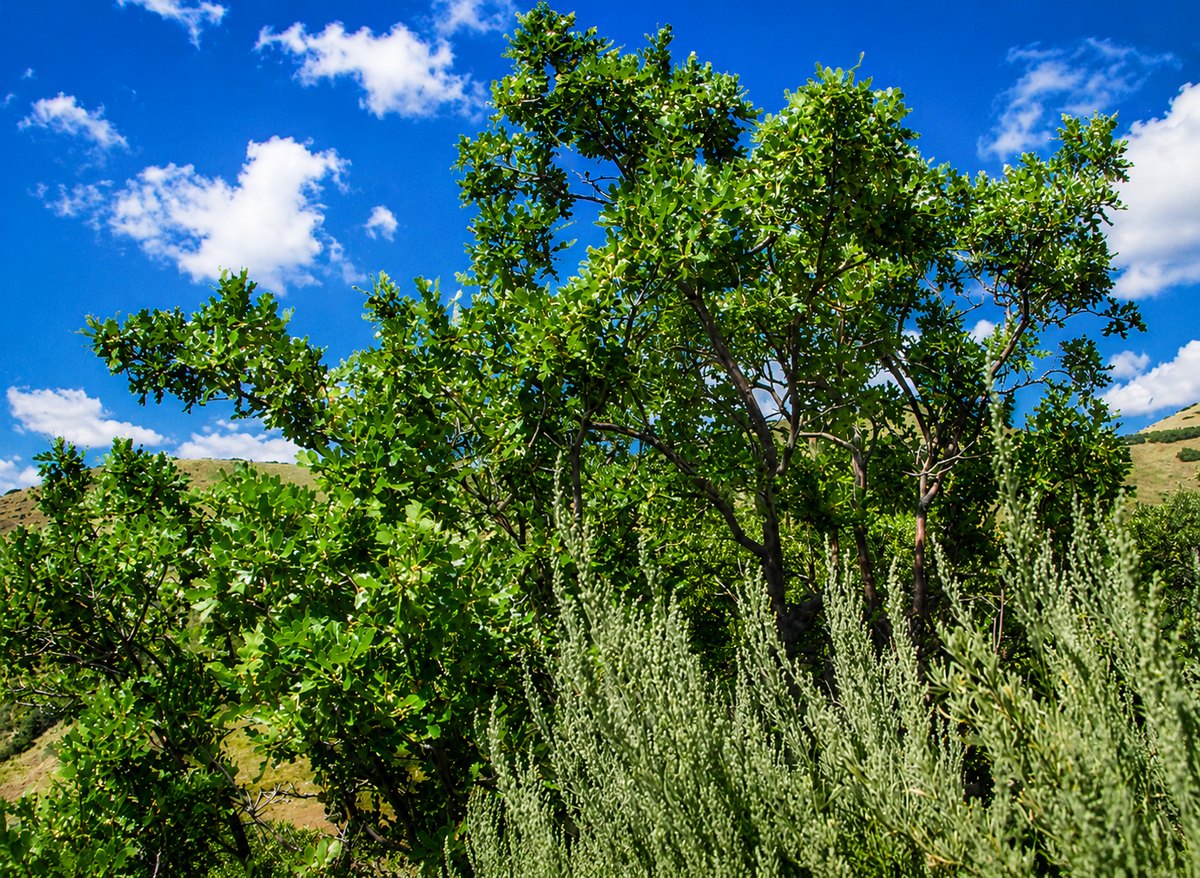
Gambel Oak
Quercus gambelii
The oak of the Utah foothills, and about as well suited to this place as a plant can be. Rugged, unhurried, and entirely at home in our soil and climate. It can be grown as a small tree or left as a large multi-stemmed shrub — we stock it as a low-branched form that reads more like the latter.
At a glance
- Typically 10–30 feet tall depending on growing conditions
- Distinctive lobed oak leaves
- Yellow, orange, and bronze fall tones
- Native to the Intermountain West
- Best for natural landscapes, native plantings, and water-wise gardens
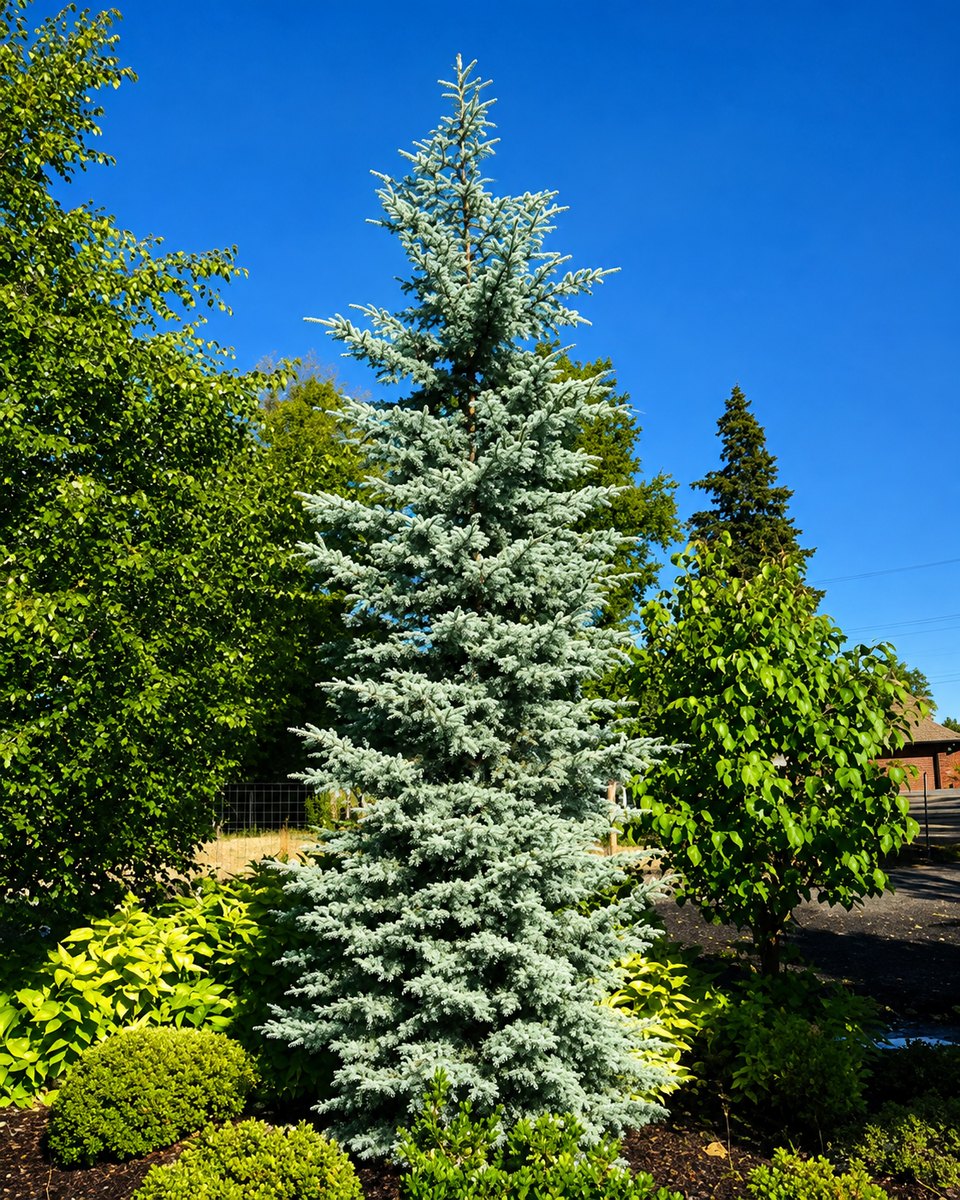
Crystal Frost Arizona Cypress
Cupressus arizonica ‘Crystal Frost’
Frosty silver-blue foliage on a narrow, upright evergreen — a genuine color contrast against all the standard landscape greens, and it holds that color all twelve months. It was found growing in the Cooks Peak range of New Mexico and selected for cold hardiness, which is why it handles our winters as well as our summers.
At a glance
- About 20–35 feet tall and 13–15 feet wide
- Silvery blue-green foliage year-round
- Upright, pyramidal form
- Exceptional drought and heat tolerance
- Full sun; hardy to Zone 5
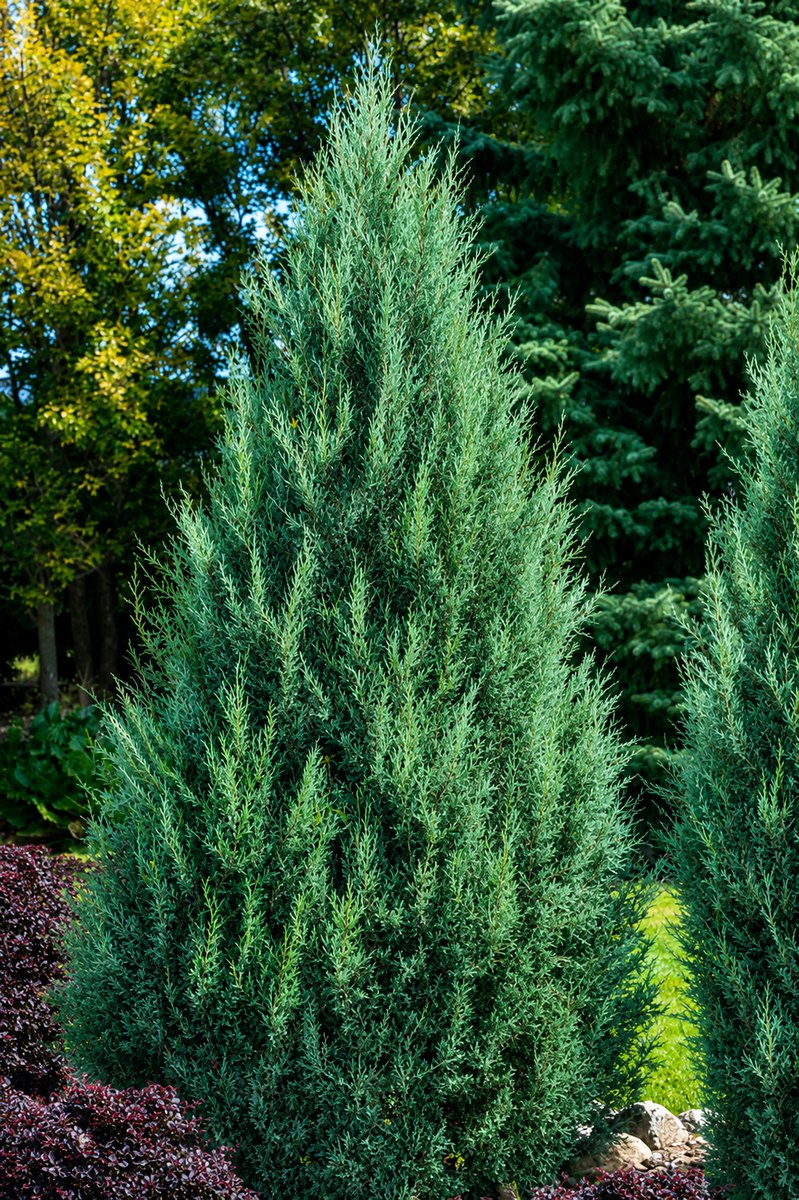
Medora Juniper
Juniperus scopulorum ‘Medora’
When you need height but have no width to give, this is the answer. Medora holds a tight columnar shape at only two to three feet across, with dense blue-green foliage year-round. Useful along a foundation, at a corner, or repeated down a property line as a screen.
At a glance
- About 8–10 feet tall and only 2–3 feet wide
- Dense blue-green evergreen foliage
- Narrow, upright, columnar habit
- Full sun; hardy to Zone 3
- Best for tight spaces, vertical accents, foundations, and screening
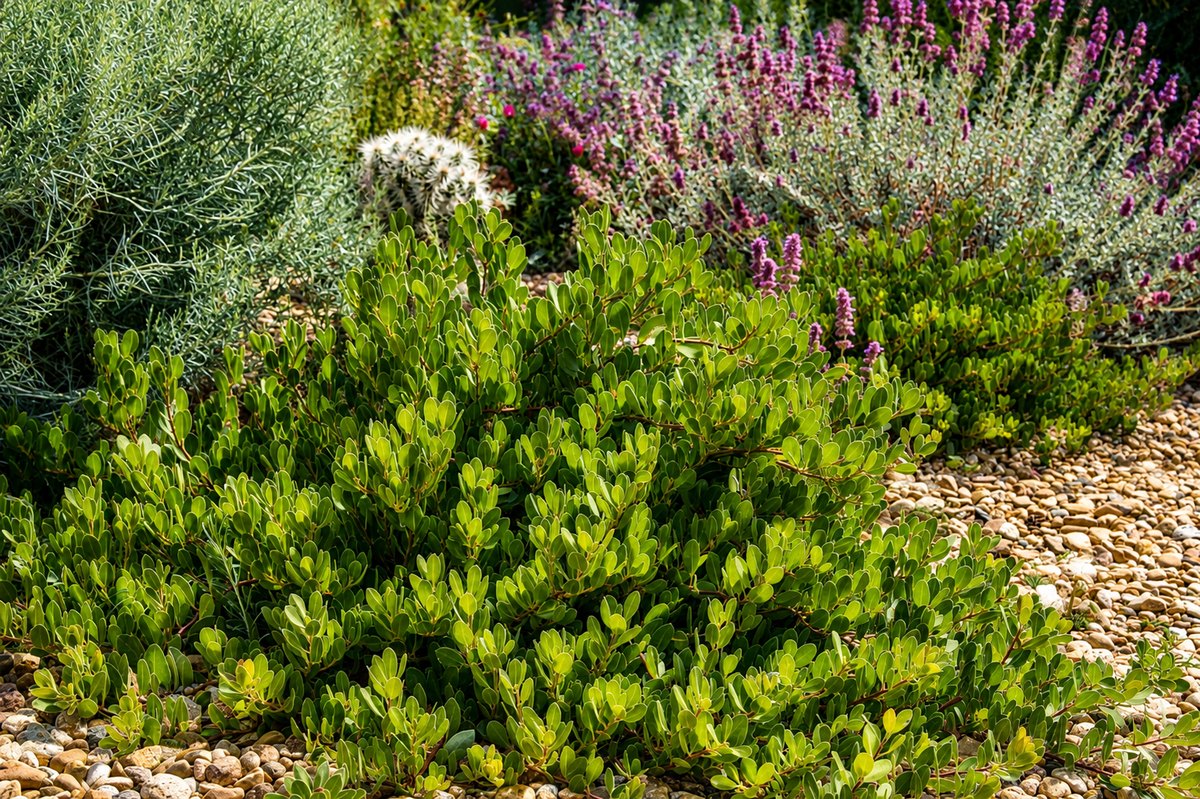
Panchito Manzanita
Arctostaphylos × coloradensis ‘Panchito’
A compact evergreen shrub with small, glossy leaves and a dense, spreading habit that holds its texture straight through winter. Manzanitas have a distinctive look — reddish stems, tidy mounded form — that reads as deliberate in a rock garden or along a slope.
At a glance
- Roughly 2–4 feet tall and wide
- Small, glossy evergreen leaves
- Compact and spreading
- Drought tolerant once established
- Best for rock gardens, borders, slopes, and water-wise beds
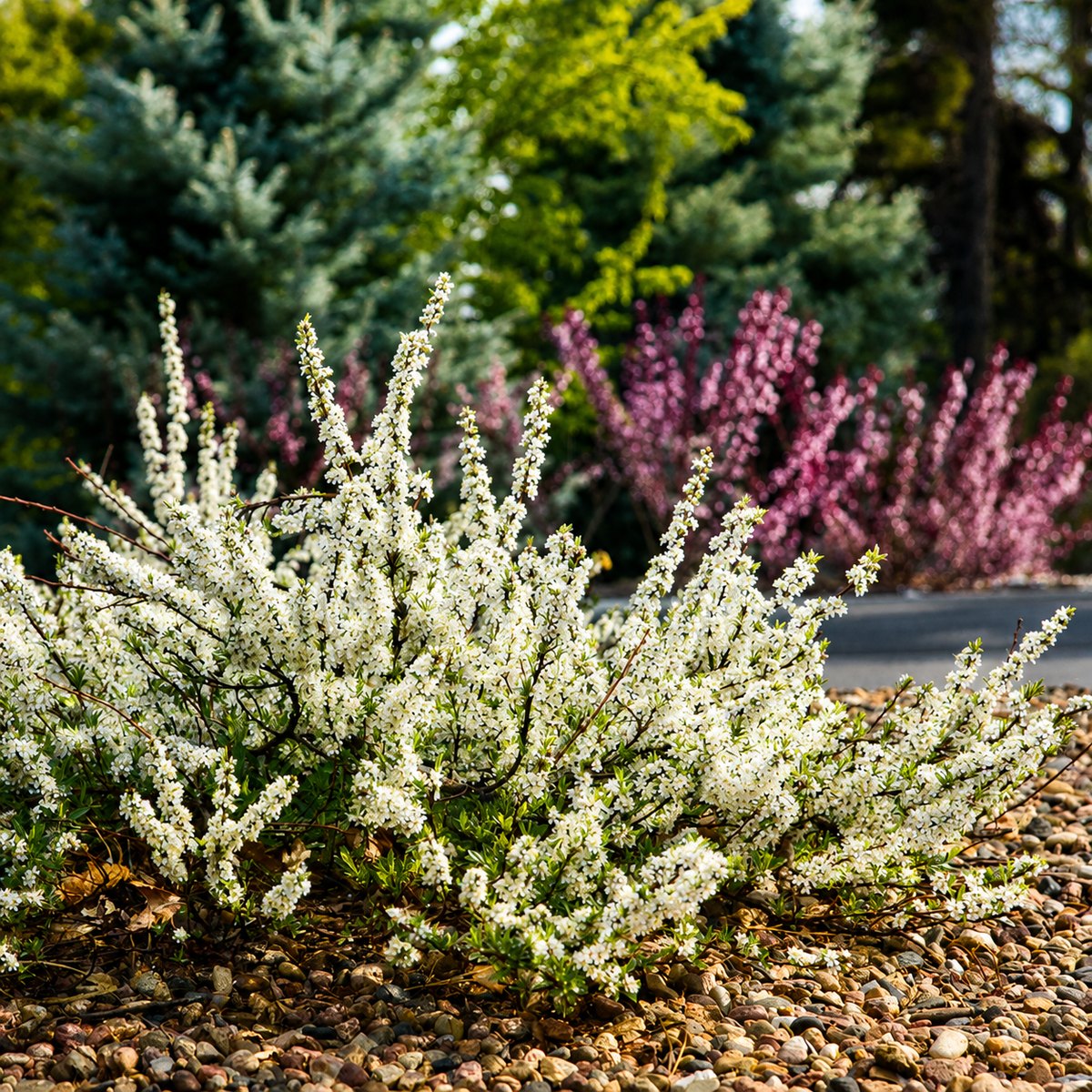
Pawnee Buttes Sand Cherry
Prunus besseyi ‘PO11S’
A low, spreading selection of our native sand cherry. This one stays ankle-high and runs wide, which makes it a groundcover rather than a shrub you meet at eye level. White blossoms cover the plant in spring, glossy black fruit follows, and the green foliage turns red and purple in fall. It’s also the most shade-tolerant plant on this list.
At a glance
- Only 15–18 inches tall, spreading 4–6 feet wide
- White spring blossoms followed by glossy black fruit
- Red and purple fall color
- Sun to part shade — the one plant here that will take a shadier bed
- Hardy to Zone 3
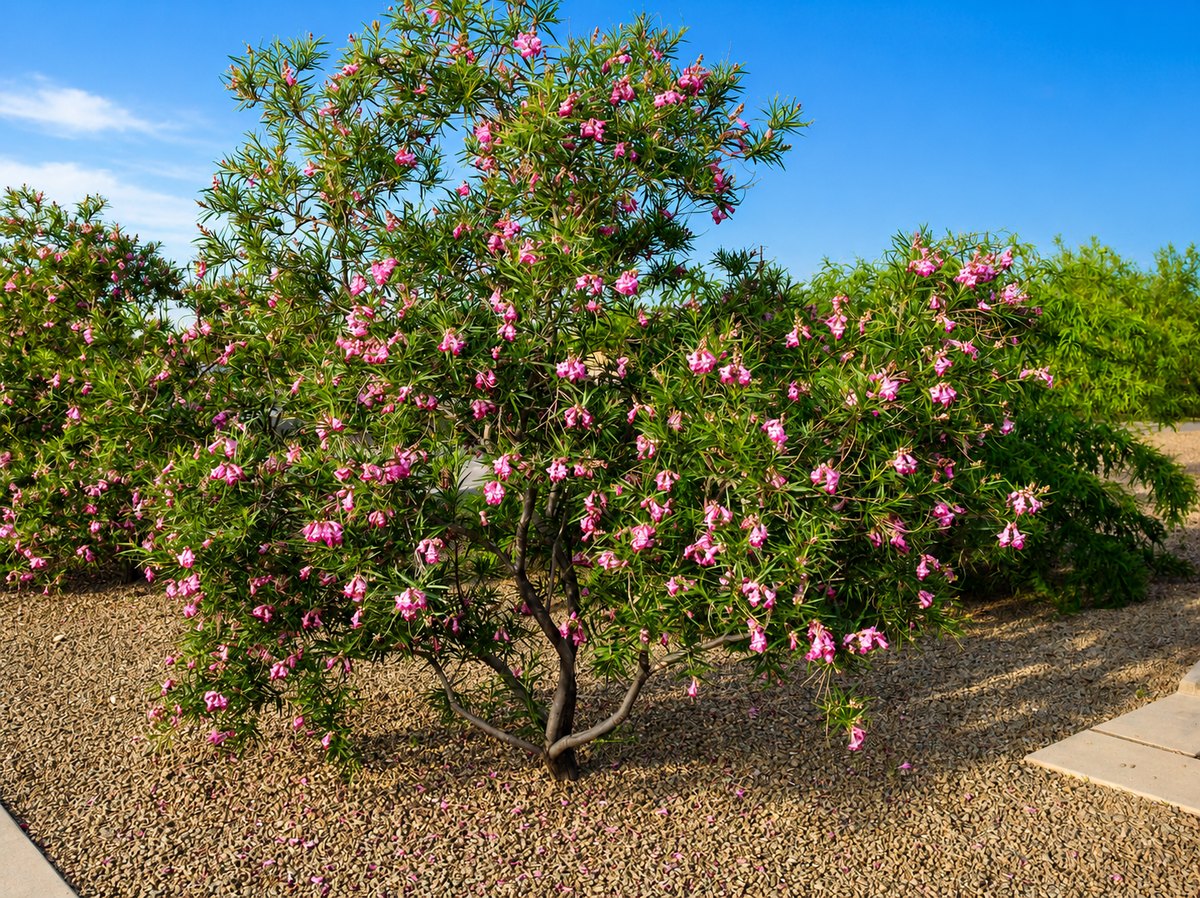
Art’s Seedless Desert Willow
Chilopsis linearis
Not a true willow, and worth planting for the flowers alone — showy trumpet-shaped blooms in pink and magenta that keep coming through the warm season, carried on long narrow leaves that give the whole plant a soft, airy movement. The seedless selection skips the long pods. Grow it as a large shrub or train it up as a small ornamental tree.
At a glance
- Grown as a large shrub or a small ornamental tree
- Trumpet-shaped pink and magenta blooms through the warm season
- Long, narrow leaves with a soft, airy texture
- Heat and drought tolerant once established
- Best for accent planting and smaller water-wise yards
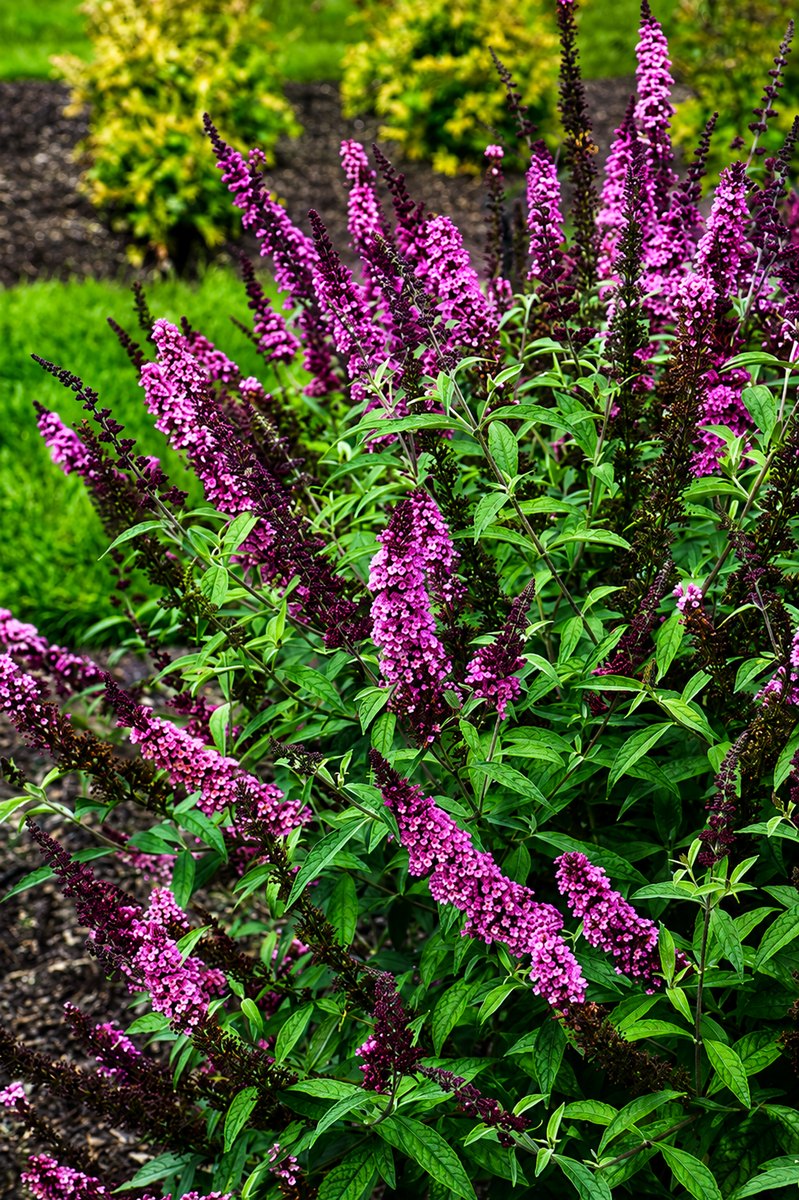
Buzz Hot Raspberry Butterfly Bush
Buddleia davidii ‘Buzz’
A compact butterfly bush that stays in scale with a normal planting bed instead of taking it over. Deep magenta flower spikes carry through the whole summer, and they genuinely do pull in butterflies and other pollinators. Ours are grown just up the road in Layton.
At a glance
- About 3–4 feet tall and 2–3 feet wide
- Deep magenta bloom clusters all summer
- Attracts butterflies and other pollinators
- Fast growing with an open, arching form
- Full sun and low water; hardy to Zone 5
It starts with the right plants
Choosing plants suited to your landscape is what lets you reduce water without giving up shade, color, texture, or year-round interest. Thoughtful design, less unnecessary sod, good mulch, usable outdoor space, and the right trees and shrubs together make a yard that is more beautiful and more efficient at the same time — not one at the cost of the other.
Come walk the yard with us
Photos only go so far with plants. Stop by the nursery in Draper and see these in person — our team can talk through which of them suits your soil, your exposure, and the space you’re actually working with. And if you’d rather have the whole thing designed and installed for you, our sister company All States Landscaping has been building outdoor spaces across the Wasatch Front since 1985.